Mission 29: Before the Revolution — Colonial & Pre-1850 Research
Somewhere around 1840, your family tree stops introducing itself and starts just… waving from a distance.
You know the feeling. You’ve been sailing backward through the census, decade by decade, names lit up like a coastline — there’s Grandpa in 1900, his father in 1880, the whole household named, ages listed, birthplaces spelled out. Confident work. Then you cross into 1840, and the lighthouse goes dark. No more names. Just tally marks. One stroke for a man, a cluster of strokes for the children, a household’s worth of people you can prove existed but can’t yet call by name. Open water beyond, and no index to chart it.
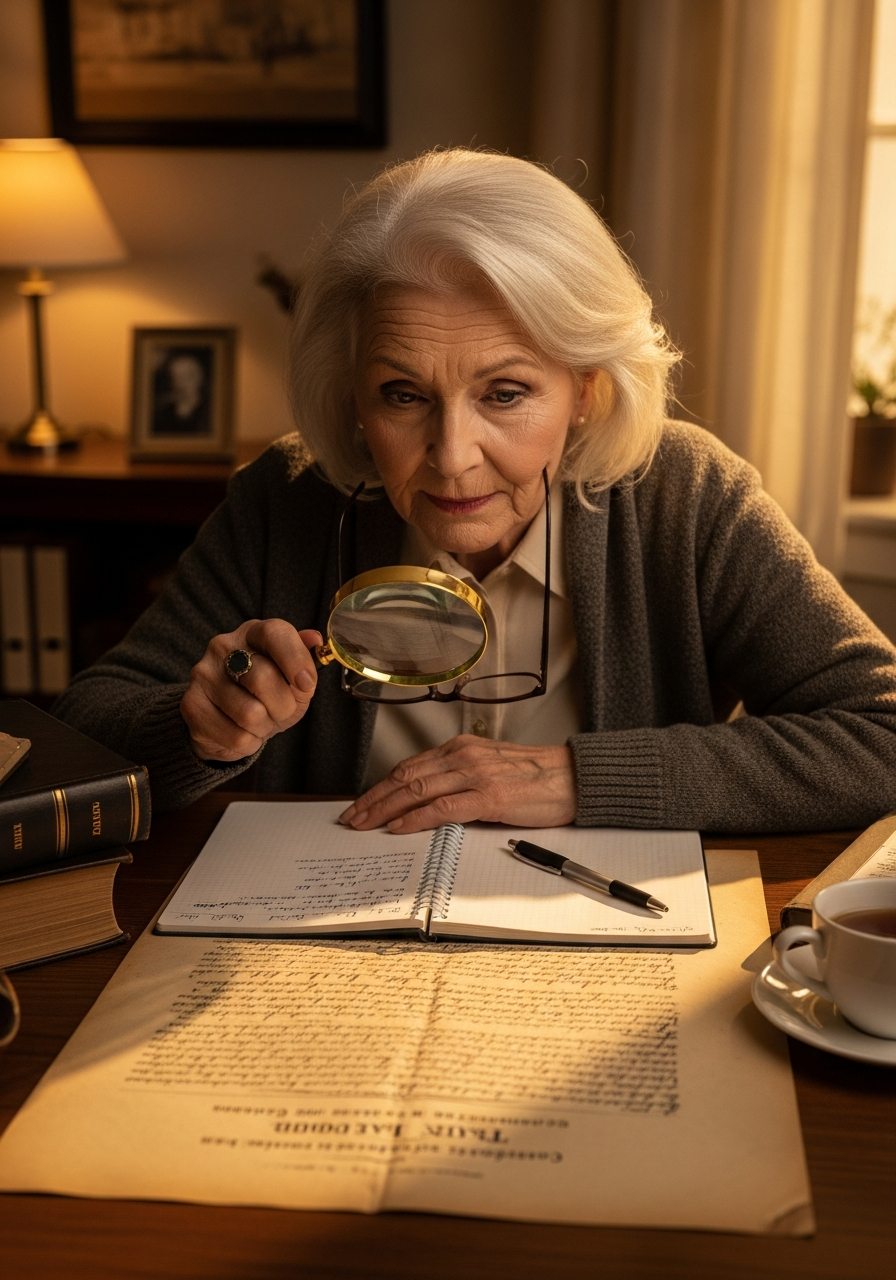
Welcome to the wall. I’ve been climbing it for years — bring your good glasses. The water out here isn’t empty. It’s just uncharted by anyone who indexed things for you. Today I’ll hand you the tools that work past 1850: tax lists, the colonial toolkit of town and church and court records, and — the skill nobody warns you about — how to actually read what you find once you get there.
What Actually Breaks at 1850
Let’s be precise about the wall, because precision is the whole game out here.
The 1850 federal census was the first to name every free person in a household — age, sex, birthplace, all of them. From 1790 through 1840, only the head of household got a name. Everyone else was a tick mark in an age-and-sex column. So pre-1850, you can’t “look up a person” the way you’re used to. You can only see that a household contained a woman of a certain age and three children in certain age brackets — and then reconstruct who they actually were from other records.
One honest caveat, because it matters and the tidy “wall at 1850” story doesn’t hold for everyone: that “every person named” milestone applied only to free people. The 1850 slave schedules counted enslaved individuals by age, sex, and color only — unnamed. If you’re researching enslaved ancestors, your wall isn’t 1850, it’s the 1870 census — the first after emancipation to name formerly enslaved people. That’s a different mission, and a real one.
Before you leap past 1850, though, squeeze every drop from those 1840, 1830, 1820 tallies. Matching the age-bracket tick marks against birth years you already know is a crude but genuine way to confirm who was in a household before anyone bothered to write down names.
Tax Lists: Your New Best Friend
If the census only shows up every ten years, tax lists show up nearly every year — and that changes everything. Because they’re annual, they’re one of the best tools you have for pinning down when someone arrived in a county, or left it, or died.
A good tax list can give you a name, a residence, sometimes an age threshold (many places taxed free males starting at 16 or 21), and descriptions of land and property. Sometimes it hands you a relationship outright — a widow taxed “for the heirs of” her late husband is a death and a marriage in five words. What tax lists won’t do is reconstruct a family; they rarely name wives, children, or anyone non-taxable.
Two warnings from the trenches. First: know the law before you trust the list. Taxable ages and exemptions — widows, clergy, the disabled — varied by colony and shifted over time, so a name’s absence only means something once you know who was exempt. Second: watch the spelling drift. The assessor wrote down what he heard, and the same family’s surname can wander from line to line in a single list. You’ll find these at state archives, county courthouses, and in the FamilySearch and Ancestry tax collections — many published “census substitute” books are really tax lists in a nice binding.
The Colonial Toolkit: Town, Church, Militia, Court
Here’s the reframe that saves this whole mission: you already own half this toolkit. Remember probate, from Mission 14? Church records, from Mission 16? Those weren’t isolated lessons. This is the moment you actually need them.
Colonial research means giving up the single-source habit. No one record covers births, marriages, and deaths pre-1850 the way the census does after. You triangulate. Town records — especially in New England — kept meticulous vital registers, land grants, and meeting minutes, many digitized and free, some reaching back to the 1630s. Church records — baptisms, marriages, burials, membership rolls — are frequently the earliest written proof your ancestor stood in a colony at all. Militia rolls (richest for Virginia and North Carolina) don’t just prove military service; showing up on one proves an adult man was in a specific place at a specific time. And court records — county minutes, deed books, orphan’s-court and guardianship files — often predate any formal vital-records system and can be the only surviving trace of a birth, death, or family tie.
Learning to Read What You Find
Now for the skill nobody warns you about. You’ll pull up a beautiful 1740 deed, ready to solve everything — and discover it appears to be written in a language made of spider legs.
That’s the old handwriting, and it’s a real barrier, not a personal failing. Early documents were penned in styles that look genuinely foreign now — the spiky secretary hand giving way, across the 1700s, to the rounder script we half-recognize. A single research project can span two or three of these.
A few tricks that unlock most of it. The long s looks like a lowercase f wearing the wrong hat — that word isn’t “Mifsissippi,” nobody’s ancestor lived in Mifsissippi; it’s just an old-fashioned s, and once you spot it you’ll never unsee it. The thorn: that “Ye” in “Ye Olde Shoppe” was never pronounced “yee.” The y is standing in for an old letter that meant th — read it “the.” And the master move for a baffling document: don’t memorize an alphabet chart. Find one letter you’re certain of — usually inside a name you already know — and use the way that scribe forms it to calibrate the rest. The clerk’s own alphabet stays consistent, even when it ignores every rule you learned in school.
Worth naming for practice: the Library of Congress’s “Early American Handwriting” guide, the National Archives genealogy toolkit, and FamilySearch’s paleography lessons. And a genuinely new 2025–2026 helper — FamilySearch’s AI-powered Full-Text Search now uses handwriting recognition to transcribe historical documents, strongest so far in land and probate collections. It won’t teach you to read the hand, but it will let you search a whole record set for a surname before you squint at a single page.
Where to Start: DAR, SAR, and Pension Gold
If you don’t know where to point all this, start with the lineage societies — and you don’t have to join. The DAR’s Genealogical Research System is free to search, with an ancestor database, a Revolutionary War digital library, and a patriot index. Useful even if you never fill out an application. (And “patriotic service” is broader than combat — paying taxes to a revolutionary government or serving in civil office can count, which loops right back to those tax and town records.)
The real treasure, though, is Revolutionary War pension and bounty-land files at the National Archives. To claim a pension, veterans and widows often had to submit sworn narratives of their service and family — birthdates, marriage dates, neighbors vouching for them — genealogical gold recorded nowhere else. Even with no Revolutionary ancestor, know these indexes exist; they’re finding aids for any colonial research.
Keep Squinting — It’s Working
I won’t pretend this is as fast as clicking through census years. It’s slower. There are fewer instant matches and a great deal more inference, and that’s all right.
This is a genuinely different kind of research, not a sign you’ve done something wrong. Your people didn’t get famous fast either — they got remembered slow, one tax list and one squinted-at signature at a time. That’s exactly what you’re doing now.
Your mission this week: pick one ancestor stuck at a pre-1850 wall. Pull the tax list for their county for a single year — and instead of hunting for the name, read the whole thing, top to bottom. Get a feel for the document before you go back to searching. That’s how the water starts to chart itself.
GRANNY SAYS: That word is not “Mifsissippi.” Nobody’s ancestor lived in Mifsissippi. It’s just an old-fashioned s in an f’s clothes — and once you learn to see past its costume, a whole century that was hiding from you comes out into the light.