Mission 9: The Neighbor Effect — Cluster Research & Community Links
Your ancestor’s best-kept secret might be living next door.
We have a confession to make.
For years, we’ve been staring at the wrong name on the census page.
There she is—your great-great-grandmother, Margaret Ellen, squeezed between the census numbers like she’s trying to stay out of trouble. We’ve memorized her age, her Pennsylvania birthplace, her children’s names, and the value of her real estate. We’ve committed her to memory like a hymn.
And yet she still won’t tell us where she came from.
Here’s what we missed. Two lines above Margaret Ellen is the Hoffmeister family. Below her is the Claflin household. Just over the page turn is another Pennsylvania family with an unfamiliar surname and a very familiar face.
We weren’t reading a census record. We were reading a neighborhood.
Welcome, dear friend, to the Neighbor Effect.
Meet the FAN Club
The smartest genealogists in the business have a name for this approach: the FAN principle. FAN stands for Friends, Associates, and Neighbors—a term coined by genealogist Elizabeth Shown Mills to describe the invisible community your ancestors carried with them everywhere they went.
Here’s the idea: when our ancestors didn’t leave the documents we need, their neighbors often did.
People didn’t live in isolation. They borrowed tools, witnessed one another’s wills, sat in the same church pew, signed each other’s bonds, farmed adjacent land, and appeared on the same census page. All that community life left a paper trail—and it didn’t always appear under your ancestor’s name.
Every record that names your ancestor also names someone standing next to them. That person has a story. Sometimes that story is the footnote that unlocks your family mystery.
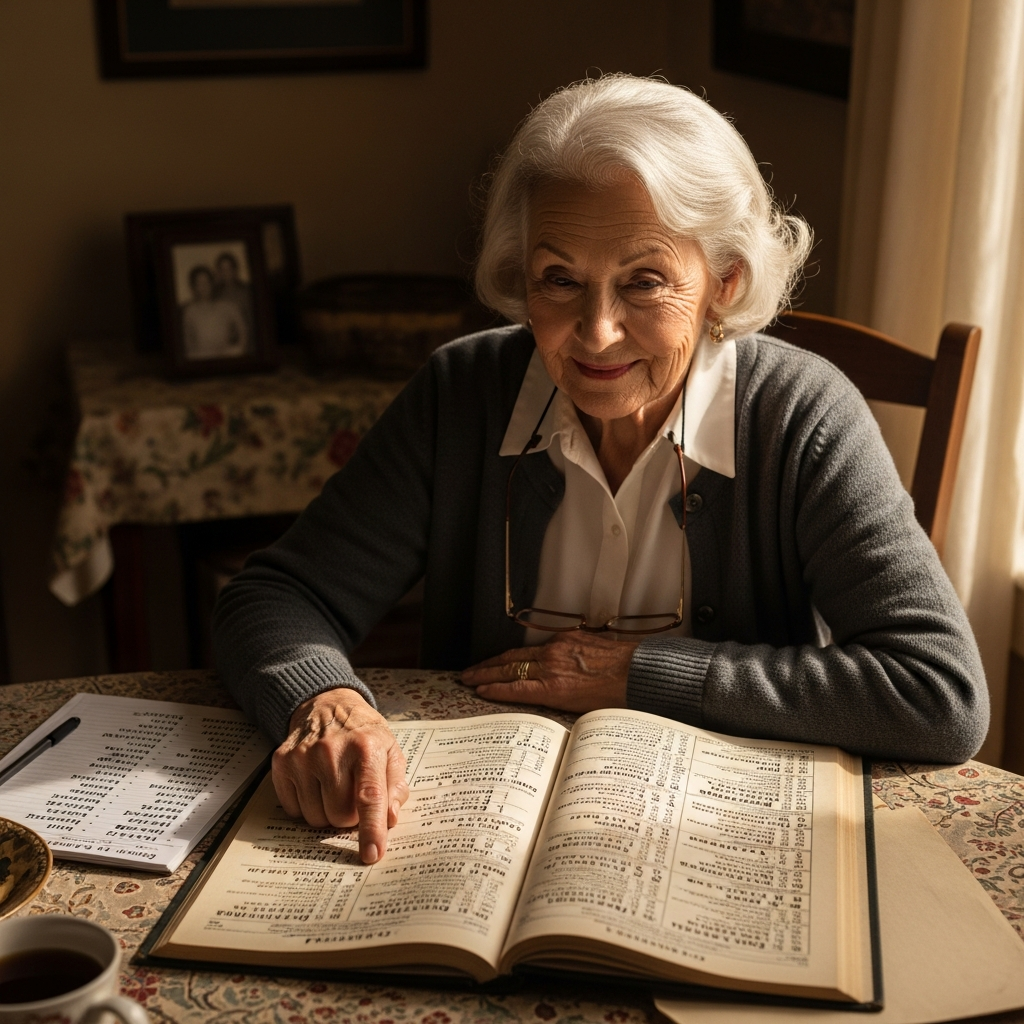
Granny says:
“It’s called the FAN principle—Friends, Associates, and Neighbors. When your ancestor went silent, their neighbors kept talking in probate records, deed books, and census pages right next door. One researcher cracked a 40-year brick wall by reading a neighbor’s will.”
How to Read a Neighborhood
Let’s say you know your ancestor was alive in 1880, but before that there is silence. No parents named. No origin recorded. Just a birthplace that says “Ohio” and a whole lot of unhelpful.
This is where you put down the magnifying glass and pick up the wide-angle lens.
Step 1: Pull the Whole Page
Don’t save only your ancestor’s line. Save the entire census page—every household on it. Better yet, pull the pages before and after too. Census enumerators walked a geographic route, which means your page isn’t just a list of names. It’s a map of a neighborhood.
Step 2: List Your Ancestor’s Neighbors
Write down every household within five entries above and below your ancestor. Note full names, ages, birthplaces, and occupations. You’re building a roster of the community.
Step 3: Follow the Surnames
Do any names appear elsewhere with your ancestor? Check the previous census: did the same cluster migrate together? Check deeds and probate records. Does a neighbor appear as a witness, bondsman, or co-signer?
Step 4: Research the Neighbors Like Family
Search each neighbor as if they were your ancestor. Look for wills and probate records. Sometimes your ancestor appears by name in another family’s paperwork—as a dear friend, a neighbor of many years, or a beloved relative whose own records never said a word.
Step 5: Expand to Church, Tax, and Probate Records
Census records are just the beginning. Tax lists show adjacent landowners year after year. Church registers record people who worshipped—and sometimes migrated—together. Probate records name witnesses, executors, and bondsmen: the people a dying person trusted most. Those people often lived nearby.
Step 6: Build Your Cluster Map
You don’t need special software. A spreadsheet works beautifully. Create a row for each neighbor and columns for each record source: 1870 census, 1880 census, church membership, deed index, and probate. Mark where each neighbor appears. The names that keep returning are your community anchors.
Did you know? Census enumerators walked a physical route. Your ancestor’s page isn’t just a list—it’s a neighborhood map.
The Cole–Snider Story
Here’s what cluster research looks like in practice.
In 1880, Elias Cole and Heinrich Snider were adjacent households in Monroe County, Iowa—farmers, both from Ohio, with children of similar ages. A researcher tracing the Cole line had hit a wall: no Ohio records would surface for Elias.
Then she looked next door.
Heinrich Snider’s probate record named “Elias Cole, my neighbor of thirty years” as bondsman. That phrase—thirty years—placed both men together back in Ohio. The researcher traced Snider to Licking County, then found Elias Cole in the county deed records as co-purchaser of land beside Heinrich Snider in 1848.
The Sniders didn’t just live next door. They carried the answer.
Your Turn
Pick one ancestor who’s been giving you the silent treatment. Pull their census page. List their neighbors. Give those neighbors the same research attention you’d give your own family.
Small-town life was communal down to the bone. People didn’t just borrow sugar—they borrowed space on the census, in the will, and in the church register. They showed up for each other in records and in life.
Your ancestor’s story didn’t happen in a vacuum. It happened in a neighborhood.
We’ve been standing on the sidewalk staring at one front door, while the whole block was waiting to talk to us.
Neighbors hold the footnotes to our stories—read them closely.
Mission Downloads
- Neighbor Effect Toolkit (PDF)—a step-by-step FAN analysis guide for beginning genealogists.