Mission 12: Baptisms, Burials, and the Books That Came Before
Before the Government Kept Score — Church & Religious Records
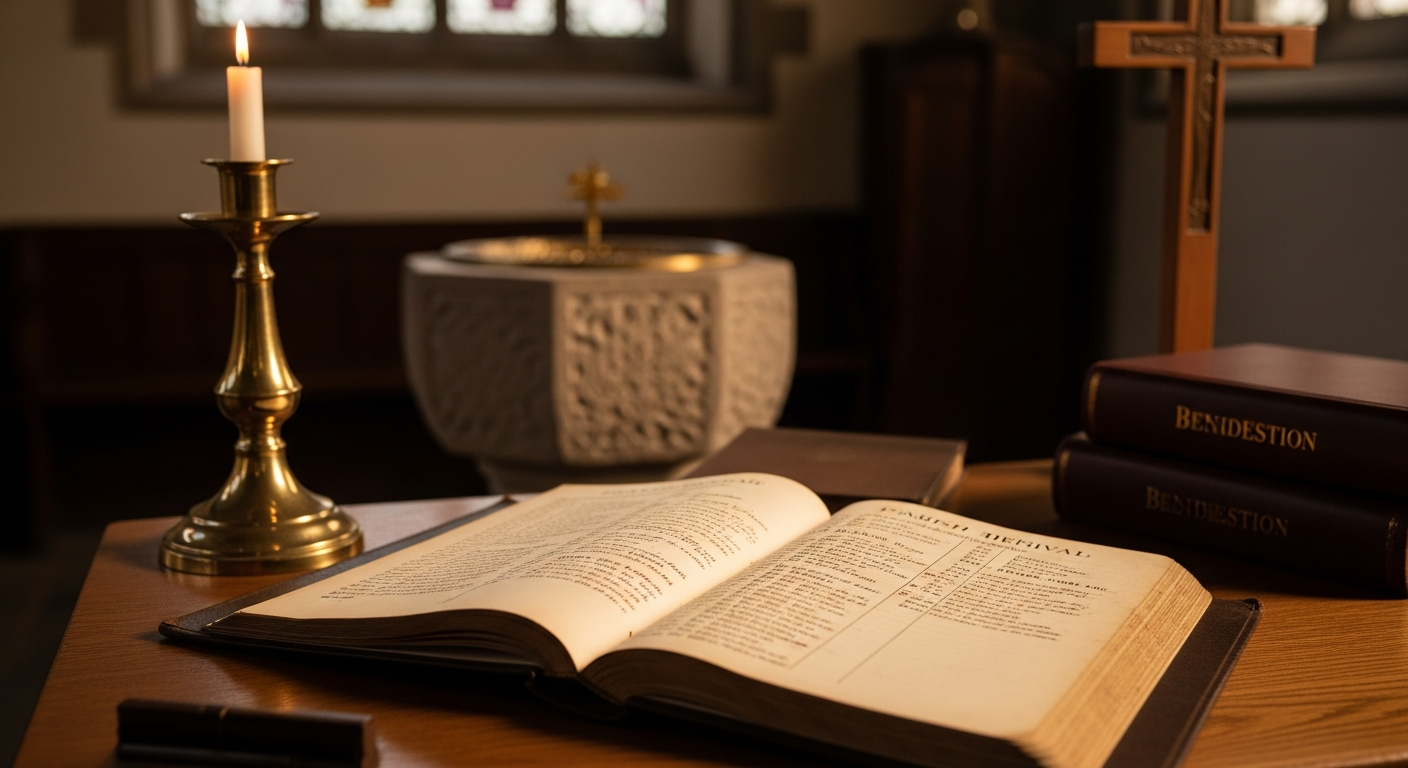
I found her in a parish register so old the binding had given up trying to hold it together. The ink had faded to a rust-brown whisper, and the pages smelled the way centuries smell—like dust with memory in it. Three lines. A name, a date, and a minister’s initials. That was it. My great-great-grandmother, confirmed alive and named and belonging somewhere, in the careful hand of a man who’d probably baptized half the county.
Twenty years of census work had hinted she existed. Tax rolls placed someone with that surname in the right township. But it was this crumbling register—tucked in a church archive that hadn’t been digitized, hadn’t been indexed, hadn’t been touched by anything more modern than a fluorescent light—that finally said: Yes. She was here. She was real.
We’re going back further than the census can take us today. Before the government got into the record-keeping business, before county clerks and vital statistics offices, someone was already writing things down. The local minister. The parish priest. The synagogue secretary. They didn’t know they were building a genealogical goldmine. They were just doing their jobs—marking the milestones that mattered: who was born, who married, and who was laid to rest.
The Original Vital Records
Here’s a timeline that surprises most beginners: England required parish churches to record baptisms, marriages, and burials starting in 1538. The earliest American church records date to the 1600s. But many U.S. states didn’t require civil birth and death registration until the late 1800s or even the early 1900s. New York started statewide birth registration in 1880. Virginia waited until 1912. Some states in the South and West didn’t get mandatory registration until the 1920s.
That gap—sometimes two or three centuries wide—is where church records become essential. For your ancestors who lived before government clerks started stamping certificates, the church register might be the only written record that they were born, that they married, or that they died.
What You’ll Actually Find
Church records vary by denomination, by era, and by the diligence of whoever was holding the pen. But here’s what to expect when you open a register.
Baptism and christening records are the closest thing to a birth certificate you’ll find before civil registration. They typically include the child’s name, the baptism date (and sometimes the actual birth date), the parents’ names—often including the mother’s maiden name—and the names of godparents or sponsors. Pay attention to those sponsors. They’re frequently relatives: aunts, uncles, grandparents, close family friends. A godparent’s name can crack open a whole branch of your tree.
Marriage records give you the names of both spouses, the wedding date, the church where the ceremony took place, and the names of witnesses. Some records also list the parents of the bride and groom, their ages, and their places of origin. If you’re trying to figure out where a family came from before they settled in a new community, the marriage register is one of your best bets.
Burial records document the name of the deceased, the burial date (sometimes the death date), age at death, and occasionally the cause of death. Older burial records can be spare—just a name and a date—but even that narrow sliver of information anchors a person in time and place.
Beyond the big three, some congregations kept membership and transfer records—documents showing when a person joined the church or moved to a different congregation. These are migration breadcrumbs. If your ancestor seems to vanish from one community and reappear in another, a transfer letter might explain the journey.
Finding the Right Church
The first question is denomination. Your ancestor’s ethnic background and community give you strong clues. German immigrants were often Lutheran or Catholic. Irish immigrants were overwhelmingly Catholic. Scottish settlers leaned Presbyterian. New England families were frequently Congregational. And if your ancestors were Quaker, you’re in luck—the Society of Friends kept some of the most meticulous records in American history.
Once you know the denomination, start with FamilySearch. The FamilySearch Library holds the world’s largest collection of church record microfilms, and many are now digitized and searchable online. Click Search, then Catalog, and search by place. Type in your ancestor’s county, then look for “Church Records” in the results. You may find entire registers already filmed and waiting for you.
If the records aren’t on FamilySearch, contact the church directly—or the denominational archive. Catholic diocesan archives hold parish registers. Lutheran synod archives hold regional church books. The Presbyterian Historical Society in Philadelphia centralizes Presbyterian records. Be polite in your inquiry, be specific about the names and dates you’re looking for, and offer to pay for research time or make a small donation.
Ancestry and Findmypast are also adding church record collections steadily. And don’t overlook the Library of Congress research guide on church and synagogue records—it’s a free, thorough starting point that lists online databases by denomination.
A Few Tips for Reading Old Registers
You don’t need to read Latin. You need to recognize about six abbreviations. In Catholic records, you’ll see “b.” for baptized, “m.” for married, and “ob.” for died. “Fil.” means son or daughter of. Once you spot the pattern, the rest falls into place.
German church records—especially Lutheran Kirchenbücher—are often written in Fraktur, an old German script that looks like calligraphy designed to keep secrets. It takes practice, but there are free paleography guides online (FamilySearch has excellent tutorials) and the letter forms become recognizable faster than you’d expect.
One more thing to watch for: godparents and sponsors often signal family connections that no other record reveals. A grandmother might sponsor a baptism. An uncle might witness a marriage. These names aren’t random—they’re clues, and following them can lead you to relatives you didn’t know you had.
Your Mission
Pick one ancestor whose birth, marriage, or death happened before civil registration began in their state. Go to the FamilySearch Catalog and search for church records in their county. Even if you don’t find your specific ancestor, note what’s available—you’re building a map of where to look. And if you do find them, sitting in a two-hundred-year-old register in handwriting that was old before your grandparents were born—well. That’s why we do this.
Those records were never meant for us. The minister who dipped his pen and wrote your ancestor’s name by candlelight wasn’t thinking about genealogy. He was recording a sacred moment—a beginning, a promise, a farewell. The fact that his careful handwriting survived long enough for you to find it is its own small miracle. Don’t rush past it.
Granny says:
“The oldest records are often the most honest. Three lines in a parish register can confirm what twenty years of searching only hinted at. Go find your three lines.”