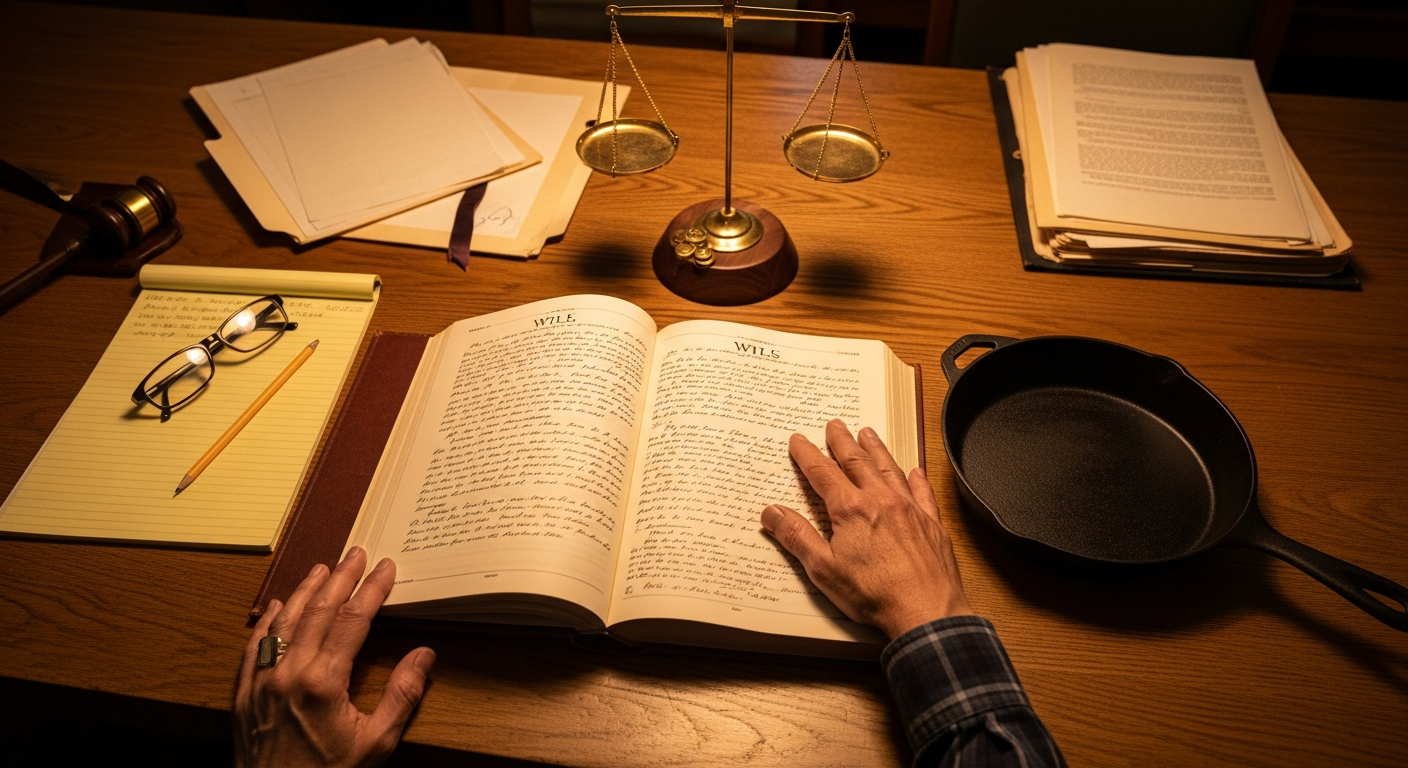
Mission 15: One Iron Skillet, Well-Seasoned
How to find your ancestors’ wills and what they reveal about the people they loved.
I once found a will—handwritten, dated 1843, filed in a county courthouse in central Pennsylvania—that included, among the usual bequests of land and livestock, the following line: “To my daughter Elizabeth, one iron skillet, well-seasoned.”
That stopped me cold. Not the land. Not the horse. The skillet. Somebody thought enough of a cast-iron pan to put it in a legal document. Somebody wanted to make sure, in writing, witnessed and notarized, that Elizabeth got the good skillet. And in that single detail, a woman I’d never heard of became real to me—a person with a kitchen, with a daughter, with priorities.
That’s what probate records do. They’re the last thing a person ever said about who mattered and what was worth keeping. Consider this your summons to the courthouse. The envelope’s been opened. Let’s see what they left you.
What You’ve Inherited: The Probate Packet
Here’s something most beginners don’t realize: when you search for a “will,” you’re only looking for one page of a much larger file. A probate packet—the full set of documents generated when someone’s estate goes through court—can include a dozen different records, and the will is often the least interesting one in the stack.
When someone died and left a will, they died testate. The court’s job was to validate the will and make sure its instructions were carried out. The person named in the will to manage the process was the executor (or executrix, if female). When someone died without a will, they died intestate, and the court appointed an administrator to sort things out. Either way, the court created records—and either way, those records are genealogical gold.
The will itself names heirs, describes property, and—crucially—states relationships. “To my beloved wife Sarah.” “To my eldest son James.” “To my daughter-in-law”—which, in the 18th century, might actually mean stepdaughter.
The inventory is where things get wonderfully specific. The court appointed people to walk through the deceased’s property and record every item with its value: “three pewter spoons (bent), one cow (lame), sundry articles of wearing apparel (worn), one featherbed and bolster.” These inventories are unintentionally funny and deeply revealing. You can see how your ancestor lived—whether they owned books, what tools they used, what their kitchen looked like, and how many chairs they had at the table.
Accounts and settlements track what the executor collected, spent, and distributed. They name heirs and their shares and sometimes span years of filings. Guardianship records appear when minor children were left orphaned—naming the children, their ages, and the person appointed to care for them. Depositions are sworn statements from neighbors, relatives, and associates: people telling family stories under oath.
Don’t just search for the will. Read the whole packet.
Finding the Courthouse: Where to Look
Probate is a county-level process. You need to know which county your ancestor died in—or at least where they lived toward the end of their life.
Start with the FamilySearch Catalog. Type in the county and state and browse categories such as “Probate records,” “Wills,” “Guardianships,” or “Court records.” Many county collections have been microfilmed and digitized. You can browse them for free even if they aren’t name-indexed. It may mean paging through will books chronologically, but the payoff is access to original documents most people never check.
Ancestry has a searchable U.S. Wills and Probates collection covering many states. It requires a subscription, but many public libraries offer free access—check your library before paying.
For records that aren’t online, contact the county courthouse. Depending on the state, you’ll be looking for the Probate Court, Surrogate’s Court, or Orphans’ Court. Different names, same function. State archives are another option; many hold older county probate records and offer online indexes or mail-order copies.
If you aren’t sure which county your ancestor died in, return to the last census where they appeared and note the county. That’s your starting point.
Reading Between the Lines
Old wills are full of traps for modern readers, especially relationship terms.
When an 18th-century will says “cousin,” it could mean almost any relative—a nephew, niece, second cousin, or in-law. The word had a much broader meaning than it does today. “Son-in-law” and “daughter-in-law” frequently meant stepchild. “Junior” and “Senior” didn’t necessarily mean father and son; sometimes they simply identified the younger and older men of the same name in a community.
The other trap is stopping too soon. Most people find the will, read it, and close the file. But the inventory shows daily life. Guardianship records reveal what happened to the children. Depositions capture what the neighbors knew. Accounts show who was owed money and who collected it.
A probate packet isn’t one document. It’s a biography written by a court clerk, an appraiser, a few sworn witnesses, and the dead person themselves—the only record where your ancestor gets the last word.
Your Assignment
Find one ancestor who died before 1920 in a county you can identify. Go to the FamilySearch Catalog, enter the county and state, and look for probate records. Browse. You may find a will, inventory, guardianship filing, administration bond, or all of them. Just start looking.
You’ll be surprised what a courthouse remembers about a person the family forgot.
Granny says: “A will is the last thing someone ever said about who mattered to them. Read it slowly. They meant every word.”